Scams can take many forms, like promising visas that disappear after payment, fake scholarship offers, fake apartment listings, and even someone overcharging you for a textbook or for an event ticket. Thus, it’s important for international students to recognize different types of scams like impersonation scams, love scams, job opportunity scams, law enforcement scams, and phishing and online scams.
As an international student, everything is new and unfamiliar for you, like the rules, people, systems, and laws, so scammers take full advantage of this, and they do scams that are harder for you to recognise.
It can happen through phone calls, emails, websites, or even face-to-face. And let’s be real, one small mistake can cost you a lot, as you could lose hundreds and thousands of dollars so how will you pay your bills?
Not just that, but you can even get into legal trouble, and what about sharing your personal information with the wrong person?
Many students don’t recognise these tricks and end up losing their money, wasting their time and effort, and getting mentally stressed, with a fair chance of getting scammed again. That’s exactly why you need to read this.
In this blog, we will identify common international student scam types that students face and provide some practical tips to help you avoid these common scams.
What Are the Most Common Scams Targeting International Students?
It’s essential to understand some common scams, as scammers mostly target international students and scholars because they know that they may have a lack of understanding about the country and their systems.
But with a little awareness, you can spot the warning signs early and protect yourself. Following digital safety tips for international students can help you protect your personal information and avoid online fraud.
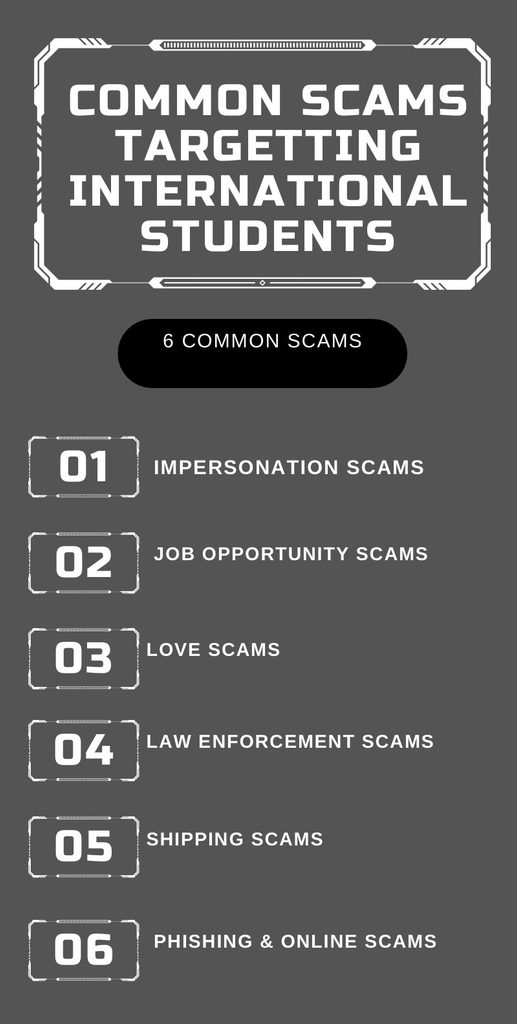
1. Impersonation scams:
Impersonation scams are when scammers pretend to be someone trustworthy. They might claim that they are contacting you from the IRS, a government agency, or Immigration services so that they can take your personal or financial information and misuse it.
For example, they might ask you to send immigration documents, bank details, or passport information and pretend that it’s for verification.
International students often get trapped into this scam as they don’t know about the special digits or short codes in government official numbers.
Federal Trade Commission (FTC) received 6.5 million reports in 2024; these include the fraud reports detailed above, as well as identity theft reports and complaints related to other consumer issues, such as problems with credit bureaus, banks, and lenders.
Scammers often know basic personal information about their target, which can make them appear legitimate, so they might also pretend to be calling on behalf of a loved one or friend, and they might emotionally blackmail them by saying things like “Your brother asked me to collect money urgently as he’s in trouble and needs your help right now.”
So to avoid this impersonation scam, it’s important for you to not answer phone calls from unknown numbers and let the unknown call go to voicemail and confirm this situation from your family or friend first.
Remember that government officials will never threaten you or ask for payment or personal information over the phone or email.
If a government agency needs any information, then you will receive an official letter or an option to call their verified customer support yourself.
So, don’t transfer money or share any personal/financial information over the phone to anyone who claims to be a government official.
2. Job Opportunity Scams:
Scammers create proper websites and accounts for their fake company on social media platforms like LinkedIn so that they look real. This scam often happens with students who are new to these platforms and who are applying for internships.
These scammers have a proper team who pretend to be recruiters and directly contact you through email, text, or phone call to hire you for an open job position but require upfront payment, like they might ask you for the registration fees or a certain amount to confirm the position.
In some cases, they might even ask for bank account details and send a fake cheque or overpay you, then ask you to return the extra money, which leads to you losing real money when the cheque bounces later.
U.S. Fraud and Identity Theft reports of job scams and fake employment agencies have surged, with losses increasing from $90 million in 2020 to $501 million in 2024.
So if you have already transferred the money, contact your bank or credit card company right away to close the account or dispute the charges.
And if it’s a serious matter, like you have already given the OTP of your card then immediately call the local police using their emergency number and report the incident.
Once you are aware of this fake company, stop all communications with them, report them on social media, and warn others on your social platforms so that no one else falls for the same trap.
Always remember verified companies never ask candidates for payment during the hiring process, and they don’t require your Social Security Number, banking information, or other sensitive data in order to submit a job application.
3. Love Scams:
Love scams happen when individuals pretend to be in a dating relationship with you, usually communicating via text/phone call in the student’s native language.
Alternatively, someone you just met may shower you with intense affection, and once you start trusting them, they create fake scenarios like “I need money urgently for medical treatment,” or “I bought you a gift but customs blocked it, so just pay the clearance fee.”
It’s not always necessary that they are from your college. For many students, they can be targeted through dating apps and social media platforms where scammers can use fake profiles to pretend to be someone they are not.
These are professional scammers, and they know how to gain your trust and develop a relationship. Thus, only accept requests from your friends and use trusted platforms.
That’s why, the Afious app is built for the exact reason as every student here is verified through their campus email, so you can’t talk to strangers that pretends to be someone they’re not.
Scammers are experts in manipulation and coercion, so if you ever have doubts or feel threatened, block their contacts and don’t engage with them.
Instantly report them to the police, but remember that while blocking them, don’t delete the chats so you have the evidence when filling out the reports. And if they are from your college, contact the Community Safety Hub on campus.
4. Law Enforcement Scams:
Scammers may pretend to be legitimate police officers or law enforcement and claim that you are implicated in illegal activity and must pay money to avoid prosecution.
Another common scam is when they say that there is a warrant out for your arrest and officers are coming to get you right now unless you pay immediately.
They may become increasingly aggressive and threaten you, like they may warn you of jail or deportation, so that immigrants and new international students panic and immediately pay without even thinking.
Remember that the government and law enforcement won’t call you or text you. If you receive a phone call like this, hang up immediately. If you receive a text like this, don’t respond or engage.
And If you’re ever unsure, contact your university’s international student office or directly reach out to your local police using their official helpline number.
5. Shipping Scams:
Some scammers tell you that they have a package for you, but they need you to confirm your personal information or pay a balance before they can deliver.
For example, you might get an email or message like “Your parcel is on hold due to unpaid customs fees”.
Since many students live in dorms or shared apartments, they may think that their roommate ordered it or assume the package is from a friend or family member, so many people don’t think about this and end up sharing their personal information or making a payment.
And later they get in trouble; thus, verifying official communications and offers is essential.
Instead of clicking on links or text messages or calling the number provided to you, use a company’s contact info from their official website.
If someone tells you to keep a secret or says something suspicious that makes you feel uncomfortable, stop and speak to someone about what is happening.
Also, when you order anything from social media pages, check the reviews first and verify the seller’s identity.
6. Phishing & Online Scams:
A phishing scam is an email that is designed to trick you into giving away sensitive information. These emails often include a fake link that looks like it’s from a person or organisation that you trust.
For example, scammers send a fake tracking number to make it look real. Their goal is to steal your credit card details, personal information, or even gain access to your device.
Then they misuse your card, use your personal information to impersonate you, and even sell your information to other scammers.
Pew Research Center finds that 73% of U.S. adults have ever experienced things like credit card fraud, ransomware, or online shopping scams.
Thus, to avoid these scams, you need to be suspicious of unexpected requests for money or personal details. If you have any doubt, then contact the organisation through a trusted email address or phone number to confirm the email is verified.
Also, don’t click on links or download attachments from unknown or suspicious emails, even if they look official. Always double-check the sender’s email address and look for spelling mistakes or unusual language.
Conclusion
If you ever suspect that you are being scammed, you don’t need to panic, as every problem has a solution when handled wisely.
There are a few important emergency numbers for reporting scams for international students, so you can save them on your phones or write them in your notes, especially for situations where you might not have internet access.
For example, 911 (emergency telephone number), also sometimes written as 9-1-1, is an emergency telephone number in the US and Canada. You can call this number for immediate help from the police if you get into any serious situation.
But remember, Penalties for abuse or misuse of 911 can range from probation or community service to fines and jail time.
Before you get into any serious situation, make sure to verify before you trust whether it’s a job offer, delivery message, or someone pretending to be from the government.
Protecting international students from scams starts with verifying information before trusting anyone. Never rush, never panic, and never share personal or financial information unless you’re 100% sure the request is legitimate.
What you should do next:
- Save your university’s official emergency and international student helpline right now.
- Share this blog with a friend, as awareness can literally save someone from losing money or identity.
FAQS
1. How to stay safe as an international student?
Learn about the customs and local laws of your country, avoid sharing personal details with strangers, resist the pressure to act immediately, and talk to someone you trust if you get in serious trouble.
2. How do I know if I am chatting with a scammer?
You might be chatting with a scammer if they ask for payment, personal/financial information, or if they create urgency or fear.
3. What are safety rules for students?
Use strong passwords on your apps. Instead of clicking links in emails or text messages or calling the number provided to you, use a company’s contact info from their official website, and don’t let anyone pressure or threaten you into giving them personal information or money. Hang up or don’t respond, and block the number.